When Running Starts to Work Against You and What Changes Everything

For many runners, the story starts the same way.
You decide to start running. At first, it feels challenging but exciting. You begin to see progress quickly, so you lean in. You run more often. You push harder. You try to accelerate the process.
And for a while, it works.
Until it doesn’t.
You start feeling more tired than usual. Runs that used to feel manageable begin to feel harder. Maybe a small injury shows up, or your motivation drops. But instead of pulling back, most runners do the opposite.
They double down.
More miles. Less rest. Less food. More pressure.
This is usually where things begin to break down.
Sam’s Story Did Not Start With Running
When Sam Foster found running, it was not about performance.
Before the sub three marathon and ultra podiums, Sam spent years in the hospitality industry. Long hours, heavy drinking, drug use, and a lifestyle that left him feeling stuck in a cycle that was hard to escape.
Running was not part of the plan. It started with a friend asking him to come out for a run. He said no more than once.
Eventually, he said yes.
At that point, he could not run half a mile without being completely out of breath. There was no immediate payoff. No breakthrough moment. Just the decision to keep showing up.
Over time, things began to shift.
First, the drugs. Then alcohol. What had been a destructive pattern started to be replaced with something more structured. Running became an outlet, but also a foundation.
Not just for fitness, but for change.
The Early Trap Most Runners Fall Into
As Sam became more consistent, he did what many runners do. He trained hard. He raced often. He pushed for progress.
But like many runners, he ran into a common problem.
He was under-fueling.
At one point, the approach was simple. Eat less. Run more. Lose weight. Get faster.
And initially, that can seem to work. The scale drops. You feel lighter. You might even see short-term improvements.
But underneath that, something else is happening.
Energy drops. Recovery slows. Progress stalls.
And often, runners get stuck in a loop. If performance is not improving, the instinct is to restrict more or train harder.
This is where working with a coach starts to matter.
The Shift From Doing More to Doing the Right Things
When Sam started working with a coach, the goal was not just to train harder. It was to train smarter.
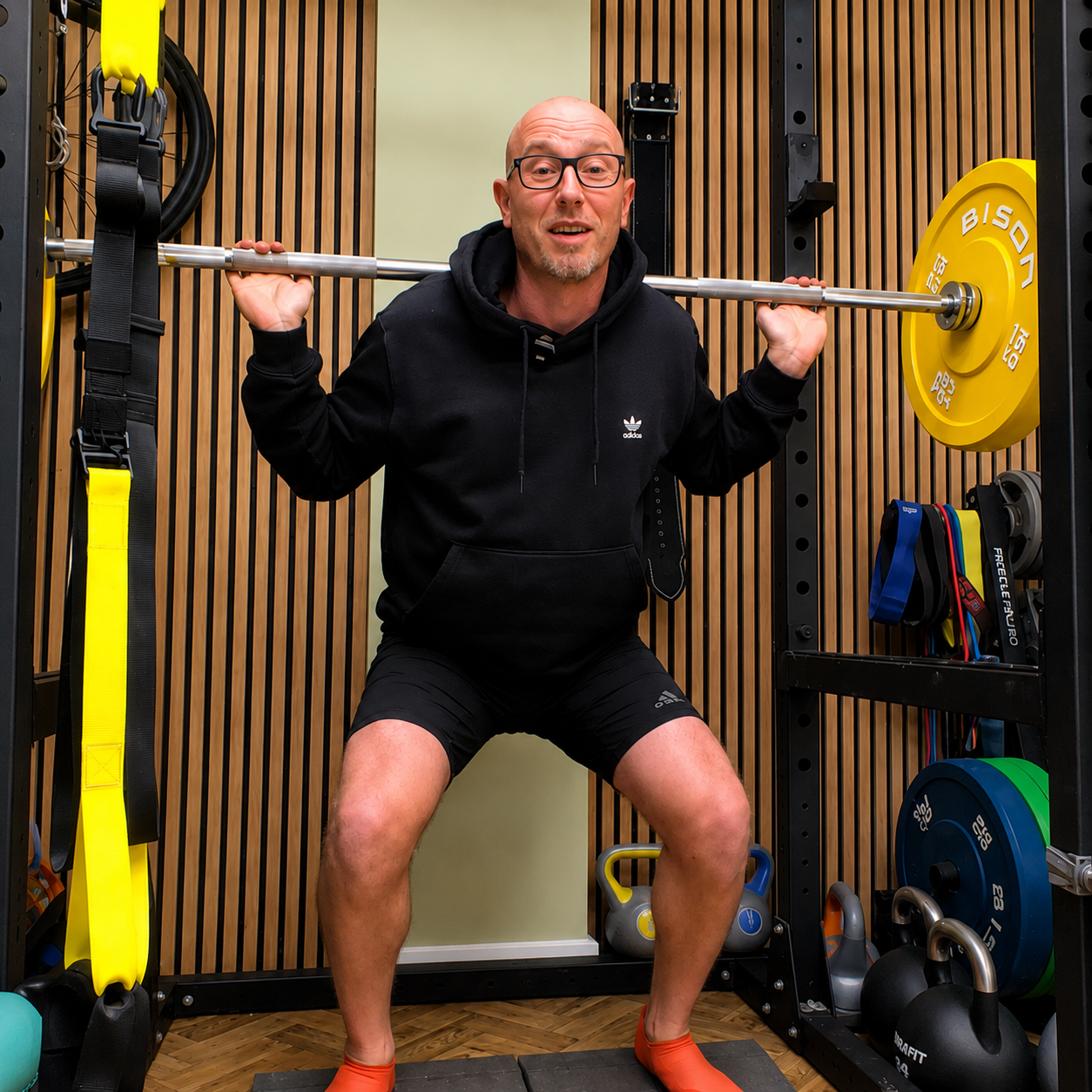
That meant structure. It meant periodization. It meant not racing every weekend. It meant building durability through consistent strength training. And importantly, it meant addressing nutrition.
This is one of the hardest shifts for runners to make.
Especially if you have experienced weight loss through restriction before.
Because there is a real fear there.
If I start eating more, will I undo my progress
Will I gain the weight back
Will this make me slower
These concerns are valid. They are common. And they do not disappear overnight.
But performance does not come from restriction. It comes from support.
Fueling properly is not about abandoning your goals. It is about giving your body what it needs to adapt, recover, and improve.
For Sam, that meant changing his relationship with food. Seeing it as fuel, not something to fear. Working with guidance instead of reacting day to day.
And the result was not uncontrolled weight gain.
It was better energy, stronger training, and improved performance.
Building Trust With a Coach
This is where trust becomes the most important part of the process.
A good coach is not there to sabotage your goals. They are there to help you reach them in a way that is sustainable.
But trust is not automatic.
It is built over time.
It is built when you follow the plan and start to feel better, not worse.
It is built when your body holds up to training.
It is built when you are not constantly exhausted or chasing the next fix.
And it is especially built when you take a step that feels uncomfortable, like increasing your calories, and realize your performance improves instead of declines.
For many runners, that moment is a turning point.
What Actually Drives Long-Term Progress
Sam’s results speak for themselves.
A sub three hour marathon. Strong performances across distances. The ability to train consistently and stay healthy.
But those results are not built on doing more.
They are built on:
- Structure instead of chaos
- Consistency instead of spikes
- Strength training for durability
- Fueling to support the work being done
- And a willingness to trust the process
Most runners do not need to train harder.
They need to train in a way they can sustain.
Ready to Break the Cycle
If you are stuck in a pattern of doing more, eating less, and not seeing the progress you expected, it is not a lack of discipline.
It is a lack of structure.
And more importantly, it is a lack of the right support.
You do not need to figure this out on your own.
With the right coaching, you can train in a way that actually works with your body instead of against it. You can build consistency without burning out. You can improve your performance without constantly second-guessing your nutrition or your training.
If this feels familiar, this is your opportunity to change direction.
Click Enquire Now and let’s start building a plan that works for you, your life, and your goals.