If you’re like most runners today, you probably have access to more data than ever before: pace, heart rate, cadence, VO₂ max estimates, and more.
But here’s the problem:
Most runners don’t actually know how to use that data.
In a recent episode of The Performance Collective, I sat down with exercise physiologist and endurance performance consultant Michael Weiss to break down metabolic testing, lactate thresholds, and what your physiology is really telling you about your training.
This post highlights the key takeaways and how you can apply them to train smarter, not just harder.
What Is Metabolic Testing?
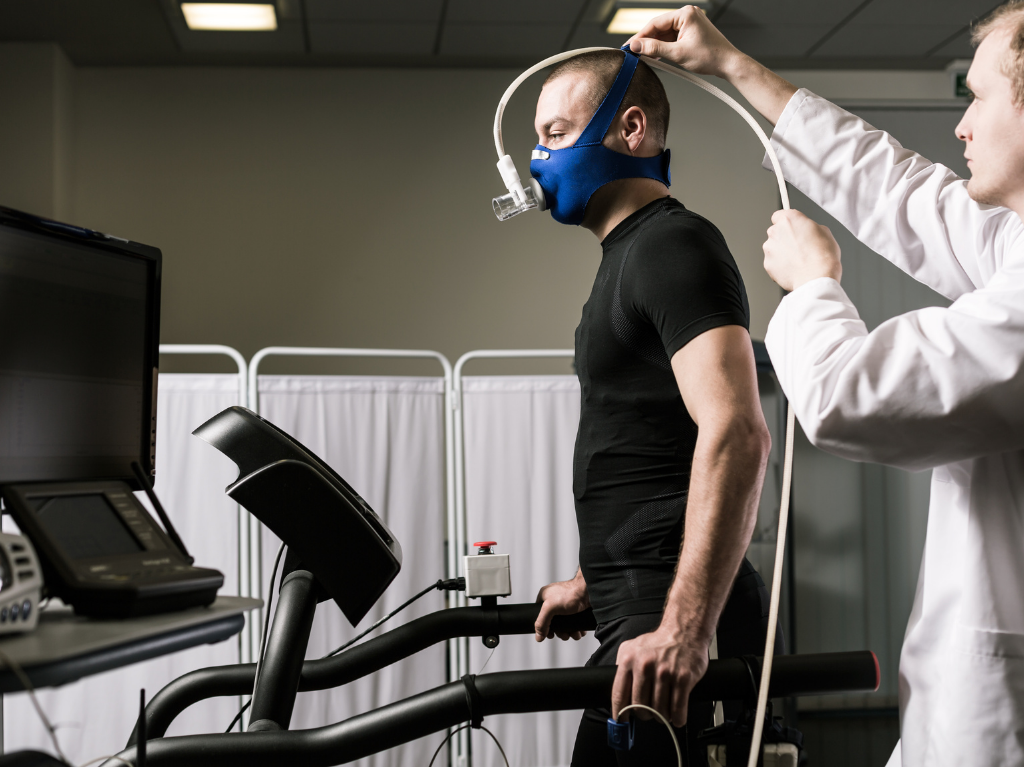
Metabolic testing (also known as gas exchange analysis) measures how your body uses oxygen and fuel during exercise.
By analyzing the air you breathe in and out while running, it provides insight into:
- How efficiently your body uses oxygen (VO₂)
- Whether you’re burning more fat or carbohydrates at different intensities
- Where your key training zones actually fall
This isn’t just “nice to know” data. It’s the foundation for understanding how your body performs under stress.
Why Fuel Utilization Matters
One of the most valuable insights from metabolic testing is understanding what fuel your body is using.
Your body can rely on:
- Carbohydrates (limited supply, higher intensity)
- Fats (virtually unlimited supply, lower intensity)
For endurance athletes, becoming more efficient at using fat is critical. Why?
Because when you rely too heavily on carbohydrates, you burn through your limited stores quickly, leading to fatigue, bonking, or struggling late in long runs and races.
Training with intention can help shift this balance so you become a more efficient, durable runner.
Understanding Lactate Thresholds (LT1 & LT2)
Metabolic testing also identifies key inflection points in your physiology, commonly referred to as lactate thresholds.
- LT1 (Aerobic Threshold): The point where your body begins to produce lactate at a higher rate
- LT2 (Anaerobic Threshold): The point where lactate accumulates faster than your body can clear it
Why does this matter?
Because these thresholds define how hard you can go sustainably.
Improving them means:
- Running faster at lower effort
- Delaying fatigue
- Performing better over longer distances
The Role of High-Intensity Training
While much of endurance training focuses on easy miles, high-intensity work plays a crucial role.
Strategic intensity helps:
- Recruit more muscle fibers (especially Type 2A fibers)
- Improve your body’s ability to use oxygen at higher speeds
- Increase overall power and efficiency
This doesn’t mean doing random hard workouts. It means applying intensity with purpose.
Data Is Only Useful If You Know How to Apply It
Here’s the biggest takeaway:
Data alone doesn’t improve your performance.
Understanding how to interpret and apply it does.
Metabolic testing gives you incredibly valuable insight, but without guidance, it can still leave you guessing.
That’s where coaching comes in.
Train With Purpose, Not Guesswork
At Maximum Mileage, we believe better performance comes from smarter training, not just doing more.
When you work with us, you’re not just getting a plan, you’re working with coaches who understand the science behind endurance training and know how to apply it to your real life.
We help you:
- Train at the right intensities for your body
- Build durability without constant setbacks
- Use data in a way that actually improves performance
👉 Ready to train smarter? Click “Enquire Now” to learn more about working together.
If you haven’t already, be sure to listen to the full episode with Michael Weiss on The Performance Collective for a deeper dive into metabolic testing and performance optimization: https://youtu.be/I4G8yhHEBng?si=d-_nkq938HiLyM2Y