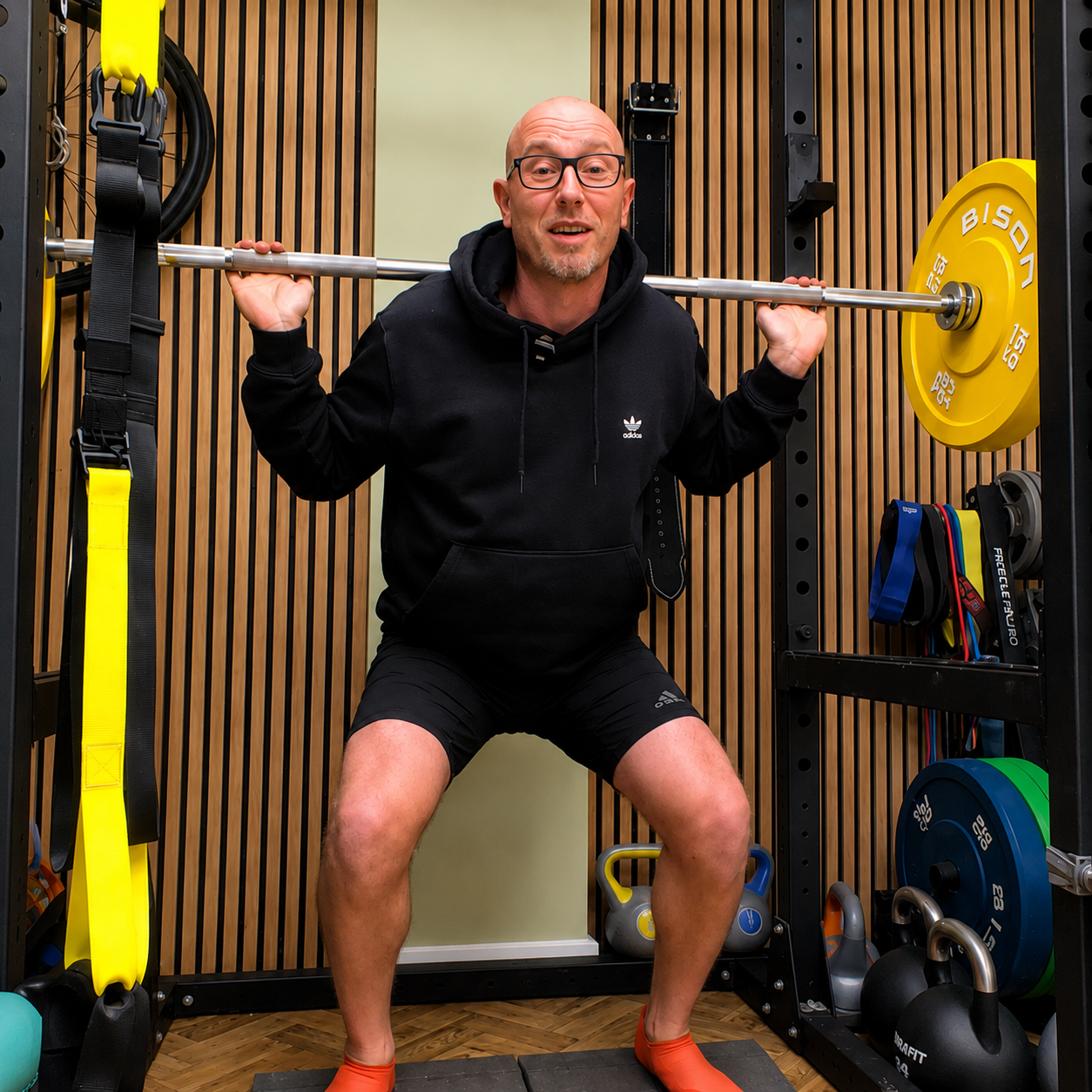
A popular concept in the endurance performance community is to keep “hard days hard” and “easy days easy.” However, strength-specific athletes often follow a very different training structure. Because their programming primarily targets musculoskeletal adaptations, training can be divided into muscle group–specific days, allowing for high-intensity work on consecutive days across different regions of the body.
Endurance athletes, by contrast, place repeated stress on overlapping physiological systems, particularly the cardiovascular system and run-specific musculature. As a result, exposing these systems to high stress on consecutive days is generally not advisable. While elite athletes may utilize advanced strategies such as double-threshold training, these efforts are typically consolidated within a single day.
As endurance athletes increasingly incorporate strength training into their programs, an important question emerges: how can runners integrate strength work while still adhering to the principle of keeping “hard days hard” and “easy days easy”?
Expert Insight: Dr. Richard Blagrove
To explore this question, I spoke with Dr. Richard Blagrove, a Senior Lecturer in Physiology at Loughborough University in the UK, widely recognized as a global leader in sport and exercise science. Dr. Blagrove is also Program Leader for the MSc in Strength and Conditioning, an accredited S&C coach, and a leading expert in strength training for endurance runners.
His work bridges research and applied coaching practice, with a focus on improving running performance, economy, and injury resilience. Over the past 15+ years, he has worked with athletes ranging from recreational runners to Olympic and Paralympic finalists and is the author of Strength and Conditioning for Endurance Runners and co-editor of The Science and Practice of Middle- and Long-Distance Running.
What Counts as a “Hard” Day?
A key point in Dr. Blagrove’s framework is that “hard” should be defined physiologically, not just perceptually. A hard session is one that creates meaningful stress requiring recovery across muscular, metabolic, or neuromuscular systems.
These sessions typically include:
- Interval / VO₂max work: repeated efforts at 3K–5K pace or faster, placing high cardiovascular and neuromuscular demand
- Threshold or tempo runs: sustained efforts near lactate threshold, emphasizing metabolic stress and lactate processing
- Long runs with quality: extended runs incorporating higher-intensity segments, increasing cumulative fatigue and glycogen demand
- Hill repeat sessions: uphill efforts that create high muscular stress, particularly in the posterior chain and calves
- Race efforts or time trials: near-maximal efforts that combine cardiovascular, metabolic, and neuromuscular stress
Understanding what qualifies as a hard session is critical, as these are the days where strength training decisions have the greatest impact.
Stacking Strength Training: When and How It Works
Dr. Blagrove emphasizes that stacking strength training on hard run days is highly dependent on the athlete’s level and physiology.
When stacking is appropriate, the type of strength training matters significantly. The recommended approach is heavy strength training, defined as high-load, low-repetition work focused on maximal force production rather than fatigue. This typically involves lifting at 80–90% or more of one-repetition maximum for sets of three to five repetitions, with full recovery between sets.
This approach differs substantially from hypertrophy training, circuit-style workouts, or high-repetition lifting, all of which create greater metabolic fatigue and are less compatible with stacking.
Heavy strength training pairs more effectively with hard run days because it is primarily neurological in nature. When volume is controlled, it does not excessively tax the system and allows stress to be consolidated into a single day. This can help advanced runners preserve true easy days and improve overall recovery across the week.
Practical Application of Stacking
In practice, a stacked training day might include a hard run session in the morning, such as intervals or a tempo workout, followed by a focused strength session later in the day. Exercises may include heavy deadlifts, split squats, and calf raises performed with low volume and high intent.
However, this approach requires discipline. Strength sessions must remain concise, with an emphasis on quality rather than exhaustion. Athletes should finish the session feeling stimulated, not depleted, as excessive fatigue can interfere with recovery and compromise subsequent training.
Importantly, not all strength modalities are appropriate for stacking. Plyometrics, explosive training, and high-repetition or circuit-style sessions rely heavily on freshness and coordination and are therefore better performed on separate days.
The Importance of Timing Between Sessions
The timing between sessions plays a critical role in the success of a stacked approach. In most cases, allowing approximately six to eight hours between a hard run and a strength session provides an effective balance between recovery and stimulus consolidation.
This window supports partial neuromuscular recovery, allowing the nervous system to reset following the run, while also enabling glycogen replenishment through adequate carbohydrate and protein intake. Additionally, it helps restore coordination and force production, both of which are essential for maintaining lifting quality.
For example, an athlete might complete a hard run session in the morning (e.g., 7–9 a.m.) and perform strength training later in the afternoon (e.g., 3–6 p.m.).
If sessions are scheduled too closely together, particularly with less than three to four hours between them, residual fatigue may significantly reduce lifting quality and training effectiveness. Conversely, spacing sessions too far apart, such as moving strength training to the following day, eliminates the benefits of stacking and effectively creates two separate stress days, increasing overall weekly fatigue. When necessary, a four- to six-hour gap can still be workable, provided that sufficient recovery occurs between sessions.
A More Appropriate Approach for Most Runners
While stacking can be effective in the right context, it is not necessary, or appropriate, for most runners.
For recreational athletes, particularly those balancing training with work, family, and other life demands, a more conservative approach is typically more effective. Hard running days should focus primarily on the run itself, with either no strength training or only light, general work such as mobility, core, or stability exercises.
Higher-quality strength sessions are better placed on easy run days, when fatigue is lower and the athlete can train with better intent and execution. This allows each training stimulus to serve its purpose without being compromised.
Maintaining approximately a 24-hour buffer before and after key sessions is especially important for this population. Recovery is influenced not only by training load but also by sleep, nutrition, and daily stress, making consistent spacing essential to avoid cumulative fatigue, inconsistent performance, and injury risk.
For most runners, long-term progress is better supported by consistency and appropriate recovery than by prematurely adopting more complex training strategies.
Bringing It All Together
Integrating strength training into an endurance program requires more than simply adding sessions to a weekly schedule. It demands thoughtful consideration of training stress, recovery capacity, and the interaction between different physiological systems.
While advanced strategies like stacking can be effective for well-trained athletes, most runners will benefit more from a structured approach that prioritizes separation, recovery, and consistency.
Need Help Structuring Your Training?
If you are unsure how to integrate strength training into your running program without compromising performance or increasing injury risk, that is exactly what we help with at Maximum Mileage.
We work with runners to build durable, individualized training plans that fit their goals, experience level, and lifestyle, helping them progress safely and effectively. As athletes develop, we can then introduce more advanced strategies, such as stacking, at the appropriate time.
Click “Enquire Now” to learn more.