For decades, when runners talked about the hardest ultramarathons in the United States, the conversation usually pointed west. Colorado, California, the Rockies, and the Sierra Nevada dominated the narrative.
But something different is happening in the American Southeast.
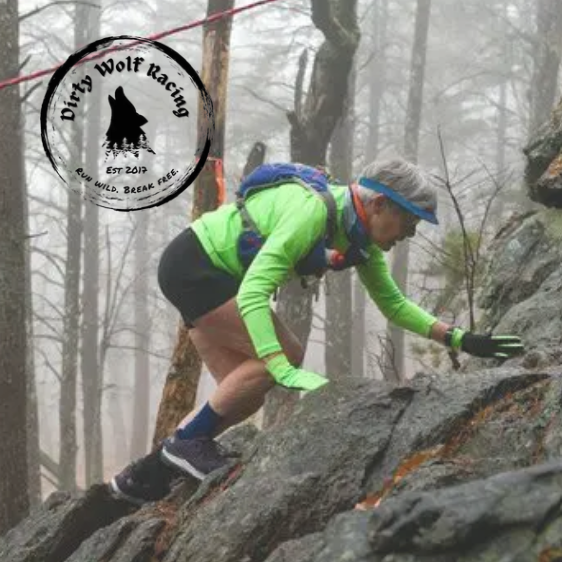
Here, the trails are rougher than most runners expect. Roots snake across the ground like tripwires. Rocks turn the trail into something closer to a moving puzzle. Summer heat wraps around runners like a wet blanket, while winter races deliver steep climbs that rival mountain races out west.
At the center of this growing ultrarunning culture is Richard Abernathy, founder and race director of Dirty Wolf Racing.
In many ways, Abernathy is a literal trailblazer. He is helping define what the ultrarunning experience looks like in a region that is quietly becoming one of the toughest proving grounds in the sport.
A Grassroots Beginning
Dirty Wolf Racing began in 2017 with a simple idea.
Abernathy had been training on the stairs at Bank of America Stadium in Charlotte with a friend who raced adventure events. One day, the friend suggested something bold. Why not host an ultramarathon alongside an adventure race and introduce more runners to that world?
The first attempt was humble: a 12-hour night race around a local lake.
Only ten runners showed up.
Many race directors might have taken that as a sign to stop. Abernathy took it as a reason to improve.
The following year the race grew to 80 runners, and Dirty Wolf Racing began to take shape.
From the beginning, Abernathy developed a clear philosophy for his races. He wants to push runners to their limits while staying within the boundaries of safety.
He will bring runners to the edge, but he will not push them over it.
At one point that line meant canceling a race course locals nicknamed “Copperhead Island” because of the heavy snake population in the area.
Designing Races the Hard Way
One thing separates Abernathy from many race directors. He personally tests the boundaries of his courses.
Before sending runners onto a trail, he runs it himself, often unsupported, to understand the real conditions athletes will face.
The goal is not to make the race easy.
The goal is to make sure it is fair.
If a section becomes genuinely dangerous, such as swampy terrain filled with snakes or hazardous wildlife encounters, Abernathy adjusts the course. If the challenge comes from steep climbs, relentless terrain, or technical trails, that is exactly what the race is meant to deliver.
In the American Southeast, those challenges come naturally.
Why the Southeast Is Becoming a Proving Ground
Trail runners who visit the Southeast quickly realize something. This region does not pull its punches.
Races like the Beast of the East 100 can include 17,000 to 19,000 feet of elevation gain, which rivals many western mountain races.
Other courses, including the notorious Leatherwood route, push the difficulty even higher. Depending on conditions, runners may face 20,000 to 30,000 feet of climbing.
Elevation alone does not define the challenge.
Southeastern trails often include:
- Dense root systems that require constant attention
- Rocky, uneven terrain
- Rapid weather changes
- Heat and humidity that slowly drain energy
Even experienced road runners find the transition humbling.
Instead of zoning out and settling into rhythm, trail runners must remain fully engaged. Every step requires attention to footing, terrain, and the changing environment mile after mile.
These conditions have helped shape a distinct Southeast ultrarunning culture built on resilience, adaptability, and shared suffering.
The Bonds Forged on the Trail
Ultrarunners often talk about learning to embrace discomfort.
Abernathy and many Dirty Wolf runners believe something deeper happens during these events.
When people push themselves to their limits, sometimes in the middle of the night and miles from the nearest road, they enter a level of vulnerability that everyday life rarely creates.
That vulnerability builds powerful connections.
Runners help each other through low moments, offer encouragement at aid stations, and celebrate together when they reach the finish line.
Many athletes eventually realize that the buckle or medal is not the most meaningful part of the experience.
The relationships and memories often matter far more.
Creative Races With Personality
Dirty Wolf Racing is known not only for difficulty but also for creativity.
Some of Abernathy’s events blend endurance sport with storytelling and adventure.
The Stone Mountain Massacre is a perfect example.
The race takes place in a beautiful state park and incorporates role-playing elements inspired by classic adventure games. Volunteers appear at aid stations dressed as Renaissance characters, and runners participate in a quest where they must collect six stones along the course.
At the finish line, runners must present all six stones. Missing even one results in a DNF.
The race concept carries a deeply personal meaning for Abernathy. It was inspired by his mother’s love for Dungeons and Dragons and role-playing games, making the event both a race and a tribute.
Then there is the Llama Experience Ultra, a relaxed time-based event where runners complete loops and can stop to spend time with a llama between laps.
Even in one of the toughest sports in the world, there is still room for fun.
Building the Future of Dirty Wolf Racing
Behind the scenes, Dirty Wolf Racing continues to grow.
Myles Flott, a Dirty Wolf ambassador and technology expert, is developing a redesigned website that will provide runners with clearer information about each race.
The platform will categorize events by difficulty level. Some races will be beginner friendly, while others represent the most demanding challenges Dirty Wolf offers.
The long-term vision is ambitious.
One day, Dirty Wolf hopes the Beast of the East 100 could become a Western States qualifier, placing the race among the most prestigious ultramarathons in the country.
A New Frontier in Ultrarunning
The American Southeast may not yet have the global recognition of the Rockies or the Sierra Nevada.
However, runners who have experienced its trails already understand something important.
Between the technical terrain, relentless climbs, and tight-knit communities, the region is becoming one of the most authentic and challenging environments in ultrarunning.
Thanks to race directors like Richard Abernathy, that culture continues to grow.
Being a trailblazer is not always about running ahead of everyone else.
Sometimes it means building the path so others can discover just how far they are capable of going.
Ready to Experience the Southeast for Yourself?
If Dirty Wolf Racing sparked your curiosity about racing in the American Southeast, you can learn more about their events and upcoming races at https://www.dirtywolfracing.com/.
And if you want to hear more of Richard Abernathy’s story and the vision behind Dirty Wolf Racing, stay tuned for this episode of the Maximum Mileage Running Podcast, releasing Thursday, March 5th, where we dive deeper into the culture, creativity, and challenge shaping ultrarunning in the Southeast.
If you are thinking about tackling one of these races, preparation matters. The terrain, elevation, and technical trails of North Carolina demand a different kind of training than most road runners are used to.
As a North Carolina-based running coach who spends countless hours on these trails, I know these mountains and conditions inside and out. If you want to arrive at the start line prepared for the roots, climbs, weather, and long miles that define Southeast ultras, I would love to help you train for it. Click "Enquire Now".