Right... to run a sub-90 half marathon you need to hold about 4:16 per kilometre for the whole race. That's 6:52 per mile, give or take a second.
You do not need 100 miles a week to get there. I've said it on camera: 90 minutes for the half is possible on three or four good runs a week, if the system is right. Consistency, the right order of work, and a threshold you can actually sustain.
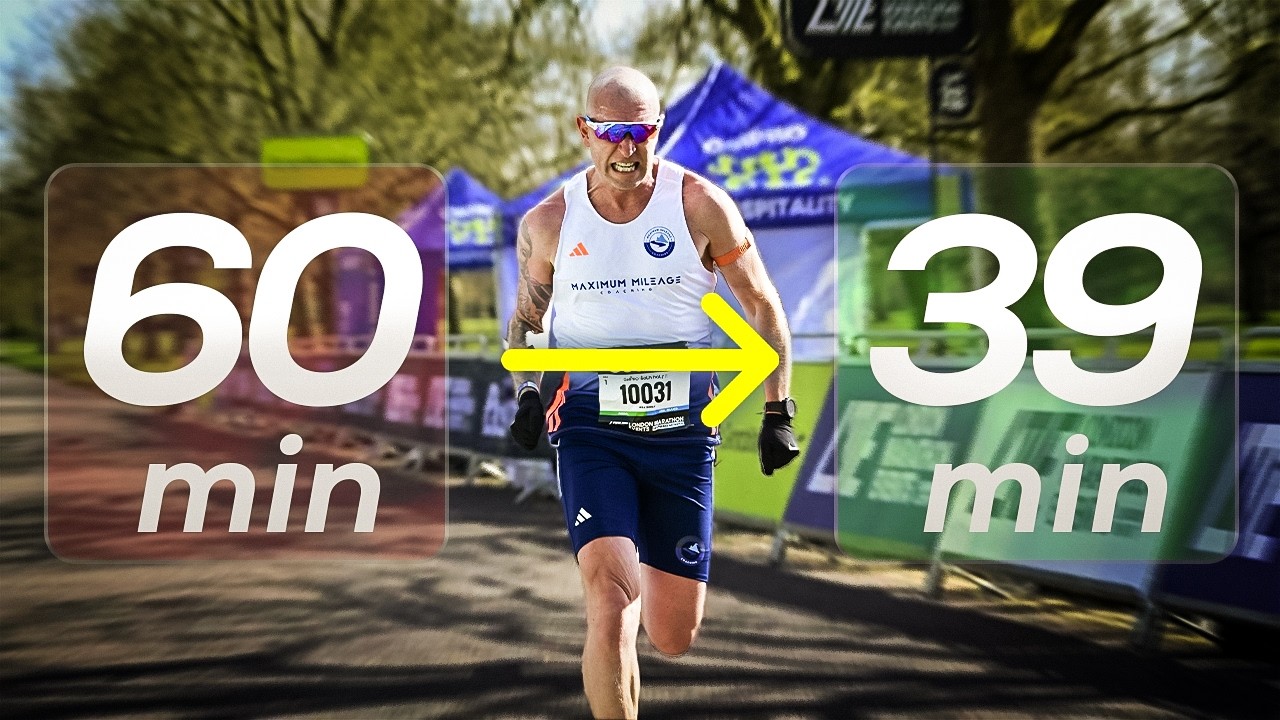
This year I've run 35:42 for 10k and 1:16 for the half without training more... just training better. Same pattern as my sub-40 10k block, stretched for 13.1 miles. The short version is in my video If you have a half marathon coming up....
Why sub-90 attempts fall apart after 10 miles
You know the one. You go out at goal pace feeling fine... and somewhere after 10 miles the wheels come off and you're hanging on for a 1:33.
Here's the thing. You were probably fit enough on paper. You just weren't durable enough at that pace for long enough.
The usual mistake is training for a half with 10k sessions, or with hero weeks that leave you cooked. You can hit the pace for 8 to 10 km... then you can't hold it when the race asks for another 11.
And that's the mechanism. A half sits just under your threshold for most people chasing sub-90. Threshold is roughly the pace you could hold for an hour. Raise that, and race pace takes less out of you.
So the block is about raising the pace you can sustain, not the pace you can hit. Different problem, different training.
Which of the three starting points are you?
The sessions are largely decided already. What changes is where you start from.
- Building: newer to consistent running, or your recent half is well clear of 90. Your first few weeks are volume, strides and maybe some hills. Nail three or four good runs a week before you get cocky with the sessions.
- Stuck: you've been around the same half time for months or years. Your first few weeks are the uncomfortable ones... slow the easy running down properly and hold one, maybe two, quality sessions. That's it.
- Returning: you've been under 90 before and had time off. Volume first, intensity later. Your body has done this before, so you can usually ramp faster, and the 10% rule everyone quotes doesn't really apply to you.
That last one matters more than people expect. Same numbers on paper... completely different decisions underneath.
Your fix for this week: get a real threshold number
Whichever group you're in, everything depends on one number, and most people have the wrong one. Your threshold.
Every pace in the next 12 weeks comes off it. Get it wrong and you spend 12 weeks on sessions that are either too easy to matter or too hard to help.
Threshold is roughly the pace you could hold for an hour. Almost everybody sets it too fast, which is why almost everybody's threshold sessions feel brutal.
They shouldn't feel easy. But a block should feel controlled... comfortably hard... broken sentences, not a time trial. Last rep still holding first-rep pace, with another one left in you.
So this weekend, hammer a parkrun or use a recent 10k. A 10k is ideal because it often sits close to an hour. If you can comfortably beat your training paces, update the threshold... not your effort.
For more on where threshold sits against your other intensities, have a read of heart rate zones when running.
The 12-week sub-90 half block, in order
The order matters more than the sessions. That's where most people lose it. Work backwards from race day: taper, then specific, then build, then base fills whatever time you have left.
For a half, I usually want about a week of taper, four to six weeks of specific work, and four to eight weeks of build. Twelve weeks is enough to cover that if you don't waste the front end.
- Base, weeks 1 to 3. Easy volume, strides a couple of times a week, and probably one short, sharp hill session. The least specific work comes first, because specificity belongs closer to race day.
- Build, weeks 4 to 7. Threshold takes over. This is where a half is genuinely made... longer blocks at threshold, progressed by time at intensity rather than by running them harder.
- Specific, weeks 8 to 11. Now it starts to look like a half. Chunks at or around goal pace, sometimes a touch quicker, with shorter recoveries, so you practise holding race pace rather than producing little flashes of it.
- Taper, week 12. Volume right down, a little quality early in the week to stay sharp. Then it's race day.
Default cutback rhythm inside the build: three weeks of training, then a lighter week. Volume comes down, intensity stays. Skip that and week seven usually feels awful for no mysterious reason.
The two sessions that carry the block
Session one: threshold
This is the one that does more for race times than almost anything else I give people. It's also boring, which is the point.
Warm up easy with a few strides. Then something like 4 x 5 minutes at that one-hour effort, with a minute or two of easy jog between. Next week, add 30 to 60 seconds to each block. Same effort. More time at intensity.
Over a few weeks: 4 x 5, 4 x 6, 4 x 7, then a lighter week. Then longer blocks... 3 x 10, 3 x 12, then 2 x 20. Forty minutes at threshold in one session, still controlled.
Three runs a week: easy with strides, threshold, longer easy. Four: add another easy. Five, if you're handling it: a smaller second quality session... not a third hard day.
Session two: half-specific
This only really appears from about week eight. Chunks at goal pace (around 4:16/km) with short recoveries, or a progression that finishes at that effort.
Think of it as your dress rehearsal. If the last block is your best, that tells you a lot. If the middle falls apart, you've found out with weeks to adjust... not on the start line.
Hill sprints and short lactate-tolerance sets still have a place earlier on. They prepare the system so the specific work lands.
Don't add a third hard session
Look... because it's a half, people assume they need stacks of hard running. So they add a third session.
That's the most common way I see a sub-90 block end early. Easy days turn into recovery days, and those easy days were part of the point.
The rule that protects both sessions: no hard days back to back. The session is the stimulus. The adaptation happens in recovery.
Most people train too hard on easy days and too easy on hard days. Can you hold a proper conversation on easy runs? If not, slow down. Shuffle the week around the quality, not the other way round.
What the long run is for in half training
For a half, the long run matters more than it does for a 10k. You still give it one job: time on feet, a steady block, or a progression. Not all three.
Build it so race distance feels ordinary. Finish feeling you could have done a bit more. If it leaves you wrecked for two days, it was an unplanned race, and it's eaten Tuesday's threshold.
In the build phase I love a progression run. Start easy, finish the last 20 minutes or so at threshold effort. That teaches you to hold pace on tired legs.
And fuel the long runs. Carbs are not optional just because the race is "only" 90 minutes. Practise early so race day is boring.
Strength work: the bit that holds the last 5k together
Twice a week if you can, once if that's all that fits. 30 to 40 minutes. Heavy-ish, low reps: Romanian deadlifts, glute bridges, calf work, single-leg stability.
Late in a half you're usually limited by what breaks down when the legs get heavy, not by the engine. That's durability, and intervals alone won't fix it.
There's a starting point in my brief guide to strength training for runners. And if a niggle doesn't settle, or it changes how you run, see a physio or your GP.
Pick the right race, and pace the first 5k
Choose your race as carefully as your sessions.
Train well for 12 weeks, run 1:32 on a hilly course into a headwind with no pack, and you'll blame fitness. The course may just not have given you a chance.
- Flat, or as close as you can get. At this intensity every metre of climb costs more than the descent gives back. Guides like the Big Half, Bath Half and Brighton Half help you match the course to the goal.
- Big enough for a pack, or at least enough runners to sit with. Running 4:16/km alone into the wind is a different job.
- Cool. Spring or autumn, early start. Heat costs more time than most people believe.
On the day, don't bank time in the first 5k. Start at an effort that's clearly hard and close to goal pace. Whatever you do at the start pays you back at the end.
If week seven feels awful
It happens to about half the people who run a block like this. The session that felt fine a fortnight ago is horrible, and your paces have gone backwards.
Get the diagnosis right before you change anything. It's almost always one of three things.
- Accumulated fatigue with no cutback. Three weeks on, then a lighter week. Seven weeks straight without one is usually the answer.
- Easy runs creeping up. Ask honestly... are my easy runs still easy?
- The sessions genuinely need adjusting. Only third. Most people jump here and add stress to a system asking for less.
A flat week is normal. A flat month is a message to back off.
Want it planned for you?
You can build all of this yourself from the steps above.
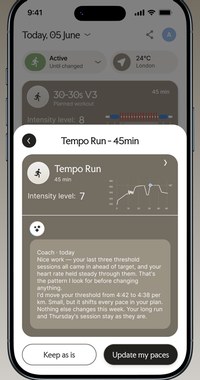
If you'd rather have it planned for you, that's what we do with coaching at Maximum Mileage, and in MaxMile, our running app for iOS and Android. Coach-built. Deterministically programmed. AI-supported where useful.