



01 / KNOW THE ROUTE
What the course asks of you
Give the bridge its own place in the plan
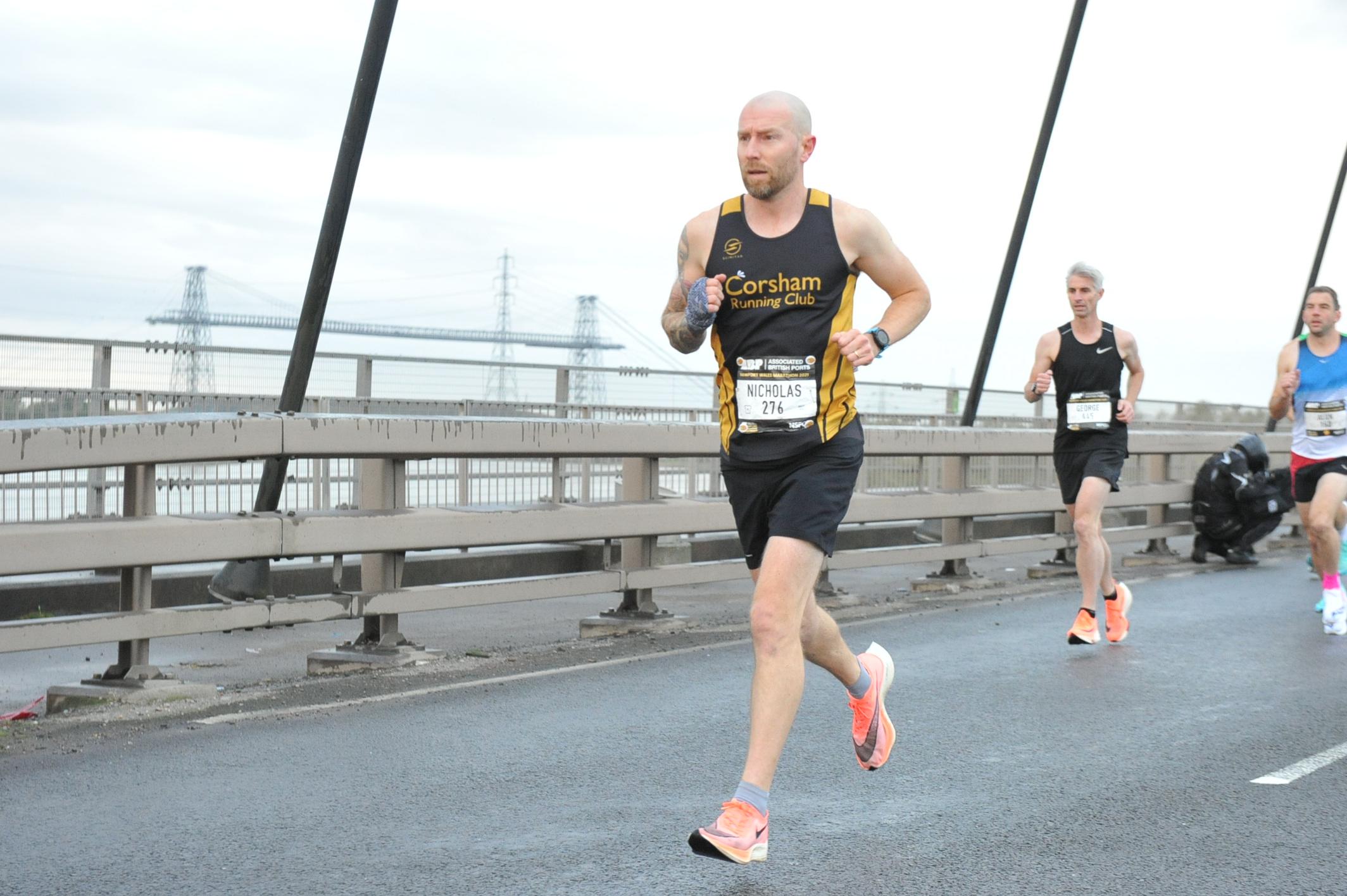
The organiser highlights the Itchen Bridge as a defining part of Southampton’s marathon. Prepare to let the climb change your pace while keeping effort controlled, then settle gently on the other side. Practising that sequence makes the bridge something familiar to look forward to.
Connect the waterfront and city sections
Southampton’s organiser describes a route shaped by the docks, waterfront and streets. Learn the final map for your entry, then use a few clear landmarks to organise your run. Each can prompt a check of breathing, posture and the next fuel.
02 / BUILD THE BLOCK
How to prepare
Build hills into a recoverable week
Use suitable rolling roads during some easy runs, starting with manageable amounts of climbing. Keep the long-run progression gradual and avoid increasing duration and hill load sharply at the same time. Consistency gives the specific work a useful foundation.
Rehearse the descent as well as the climb
Practise a comfortable uphill effort, then use relaxed steps to descend without reaching far ahead with each stride. Introduce downhill exposure gradually and allow recovery afterwards. The skill is control that still feels comfortable when the run has been going for a while.
Combine terrain and fuelling practice
On selected longer outings, practise taking fuel around changes in gradient. Use an easier stretch when that feels more comfortable, then return to your rhythm. Find a carrying setup that stays accessible whether you are climbing, descending or running level.
Bring the running and strength work into one place. Explore MaxMile for your Southampton Marathon preparation, or compare our personal coaching options.
03 / PUT IT INTO PRACTICE
Pace the race you have trained for
Choose a steady opening from your recent training and let the bridge or other rises shape the split. Keep your shoulders relaxed and resist trying to force a level-road pace uphill. Regain your rhythm gradually after each crest.
Keep eating as rehearsed and use course markers as broad progress checks. Through later sections, focus on the next landmark and controlled movement. Shape the finishing effort around the conditions and energy you have, enjoying the city support along the way.
04 / MAKE ROOM FOR TRAINING
When should your block start?
The 2027 ABP Southampton Marathon is on Sunday 11 April. A 16-week marathon block would begin around Sunday 20 December 2026, and an 18-week block around Sunday 6 December. Either way, the opening weeks run through Christmas, so agree a realistic minimum for the holidays rather than stopping and restarting in January.
Your longest runs will fall in February and March, so plan them in daylight and include some bridge-style climbs and descents. Easter Sunday is 28 March 2027, two weeks before the race, which is taper time. The organiser has also added a Family Mile and Schools Challenge on Saturday 10 April, so plan race-weekend logistics early if your family is taking part.
05 / SORT THE PRACTICAL BITS
Kit and race-weekend planning
Use the official guide for the exact route and distance-specific directions. Do not assume an older lap count, bridge-crossing count or start location applies to your entry. Check road closures when planning travel to the race area.
Test road shoes and layers on rolling long runs. Agree an accessible supporter meeting point and keep a post-finish layer ready. Confirm current station supplies and permitted carry equipment before your final kit rehearsal.