

01 / KNOW THE ROUTE
What the course asks of you
Settle in before the route opens out
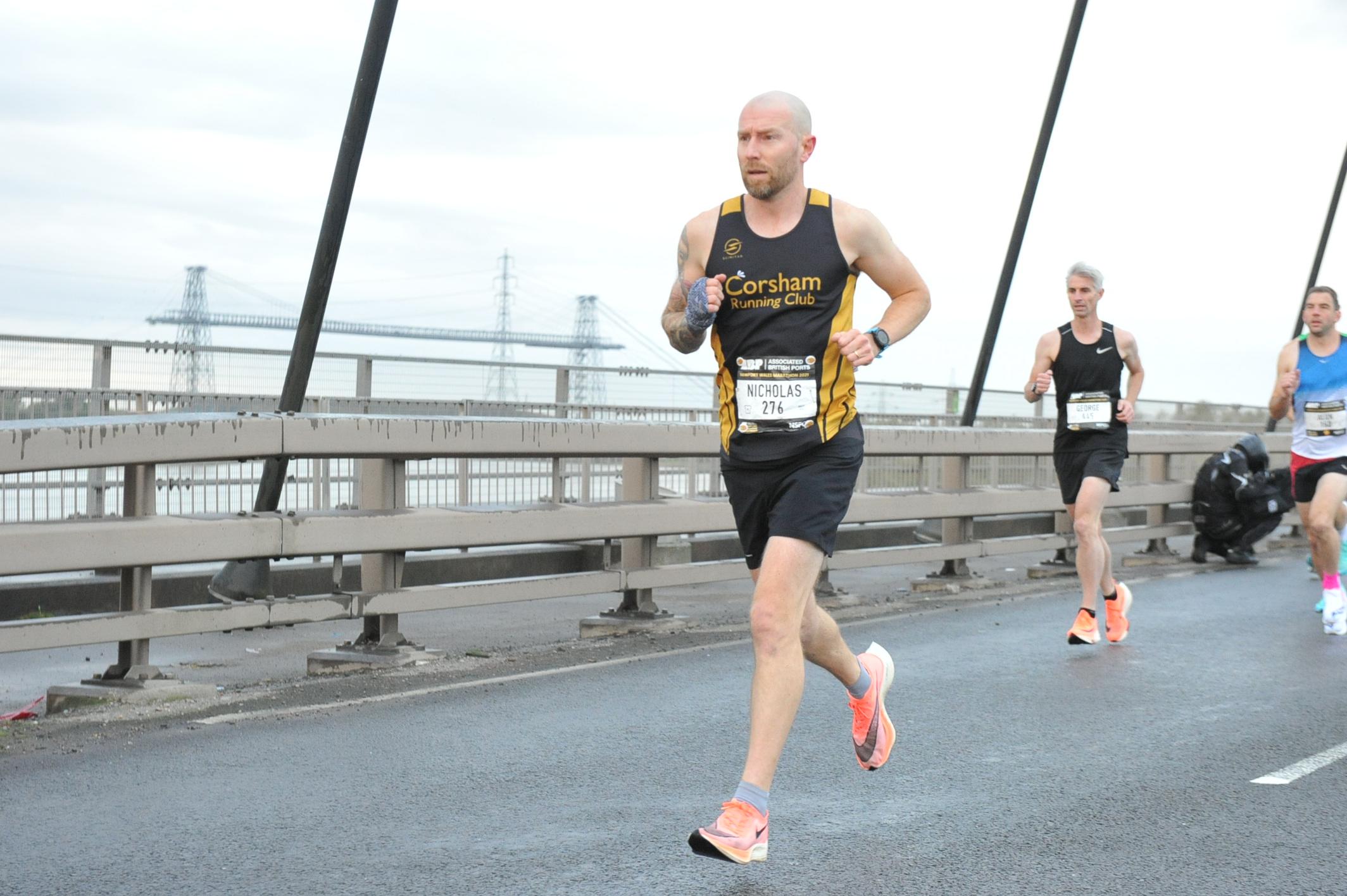
The current organiser description starts on the riverfront, loops through the city centre and visits the International Sports Village before the Gwent Levels. Use that opening to find your rhythm rather than treating the early support as permission to race harder.
Practise the quieter, steadier work
The published route turns at Redwick and includes a later loop around Goldcliff and the Wetlands. Repeated scenery is a useful reason to practise running by your own effort and routine, rather than relying on a fresh landmark every few minutes.
Save something for the riverfront return
The course description brings runners back along Usk Way. Plan to keep working in that final section, rather than expecting a flat profile to make the last miles easy.
See the organiser's current course description. It describes changes made since 2024; recheck the final 2027 route before relying on individual turns.
02 / BUILD THE BLOCK
How to prepare
Make steady running your strength
Build a repeatable week with easy mileage and a long run that grows in line with the rest of your training. For a road course like Newport, include suitable longer stretches on a consistent surface, so sustained running is familiar by race day.
Do some work at your intended effort
When your base is ready, practise controlled marathon-effort sections. Judge them by how they fit into the whole week, not just the pace on the day. You should be able to recover and continue training.
Have a plan for exposed conditions
For the Gwent Levels section, prepare to respond to the conditions you actually get. If a training run is windy, use it to practise steady effort rather than forcing the same split in every direction. There is no need to seek out bad weather or predict race day months ahead.
Practise taking your chosen fuel while running and keeping the routine going when concentration drops. Our marathon-plan guide explains how the wider block fits together.
03 / PUT IT INTO PRACTICE
Pace the race you have trained for
A flatter course gives you fewer obvious reasons to back off, so decide your opening effort before the start. Do not use a fast first few miles as insurance against slowing later.
Through the longer road sections, check your breathing, effort and fuelling rather than only the watch. If there is a headwind, let the pace reflect the extra work. As you return towards the riverfront, work with what remains rather than chasing time lost earlier. The aim is a controlled whole race, not a perfect-looking first half.
04 / MAKE ROOM FOR TRAINING
When should your block start?
For 18 April 2027, a 20-week preparation period begins on 29 November 2026; a 16-week period begins on 27 December. These are examples for planning your diary, not ready-made prescriptions.
Pick the structure from your current running, target and available time. If Christmas will disrupt training, plan around it now rather than trying to make up missed miles in January. Read our marathon taper guide when planning the final part of your block.
Coaching gives you someone to discuss those trade-offs with. MaxMile is the app-led option if that is the support you prefer.
05 / SORT THE PRACTICAL BITS
Kit and race-weekend planning
Test shoes and clothing on the sort of sustained road running you will do at Newport. Rehearse your breakfast and fuel-carrying setup, then check the final organiser information for the supplies actually available on the day.
Sort transport, parking and your post-race meeting point before the weekend. Do not treat an older route map or last year's race timetable as your 2027 instructions.