

01 / KNOW THE ROUTE
What the course asks of you
Settle into the opening trails
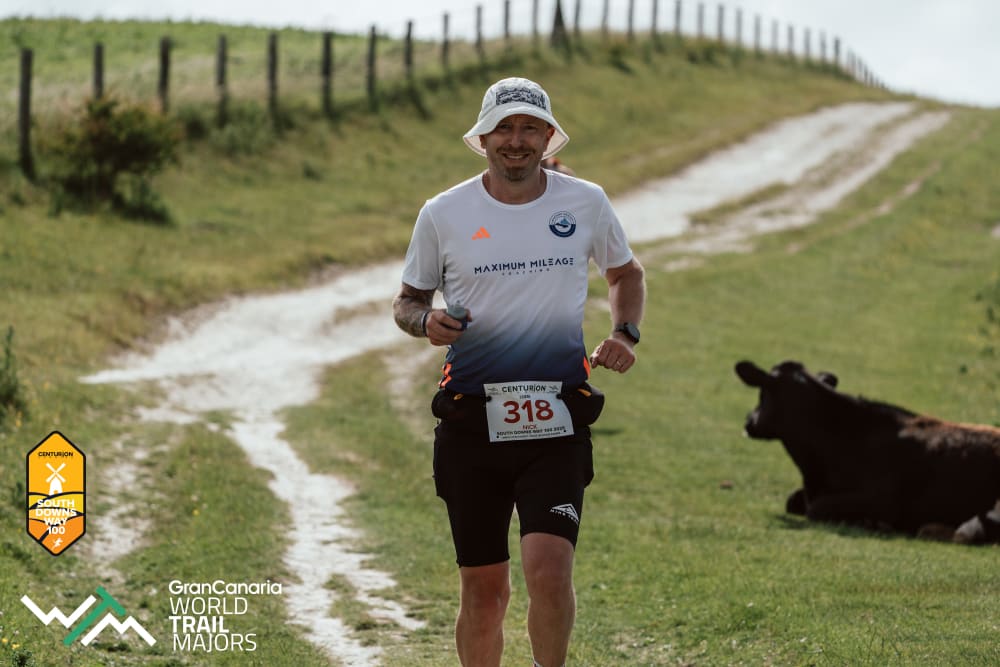
The first six miles lead towards Chanctonbury Ring before joining the South Downs Way. Use the opening to find a comfortable effort and get your practical routine started. Once on the ridge, let each rise and descent shape a natural rhythm.
Look forward to the finish
The final part follows the same approach as the South Downs Way 100 and finishes with a track lap in Eastbourne. Build the ability to descend comfortably late in a run, with quick, relaxed steps and attention on the trail ahead.
02 / BUILD THE BLOCK
How to prepare
Make hills a familiar part of the week
Choose rolling routes for some easy outings and introduce longer climbs gradually. Practise purposeful hiking as well as running uphill. Your aim is to reach the top ready to continue, with enough control to settle into the next descent.
Prepare for open ground
Use suitable local trails to practise running with your race pack and adjusting layers. On windy days, work from effort and breathing rather than trying to hold the same pace in every direction. Keep the outing appropriate to conditions and your experience.
Bring fuel into the longer runs
Rehearse eating and drinking at a comfortable effort, including during walk breaks. Test where supplies sit in your pack so you can reach them easily. Build a routine you enjoy and can repeat; note which choices work well as outings become longer.
Bring your running and strength work together. Explore MaxMile for your South Downs Way 50 preparation, or compare our personal coaching options.
03 / PUT IT INTO PRACTICE
Pace the race you have trained for
Begin at an effort you can maintain across repeated hills. Decide early that hiking the steeper sections is part of your plan, then use the more runnable ground to return to a relaxed stride. Leave room to enjoy the views and keep your fuelling routine going.
Plan checkpoint visits around the current time limits, allowing for stops. In the later miles, focus on posture and safe foot placement. A steady final descent and the lap of the track give you a clear sequence to work towards.
04 / MAKE ROOM FOR TRAINING
When should your block start?
An example 20-week block ending on 10 April 2027 begins on 21 November 2026. Use that as a planning marker, with a consistent running base already in place. Your own preparation may need more time.
Map work, family commitments and other races into the calendar first. Build the specific hill and long-run work gradually, make room to recover between demanding outings, then ease the load towards race day. Regular, manageable weeks give you a strong foundation for the adventure ahead.
05 / SORT THE PRACTICAL BITS
Kit and race-weekend planning
Train in shoes suited to chalk and the trail conditions you encounter. Rehearse your pack, waterproofs and lighting, then compare your setup with the organiser’s full mandatory list. Spring conditions can vary, so make your layer choices from the actual forecast and final instructions.
Arrange travel for a start in Worthing and a finish in Eastbourne. Confirm registration details, transport and supporter access from the current event information. Practise finding what you need in your pack so race-morning preparation feels familiar.