01 / KNOW THE ROUTE
What the course asks of you
Open moorland to Foyers
The race starts on moorland between Fort Augustus and Whitebridge. The organiser describes the first six miles as Highland scenery before Foyers, where runners get their first view of Loch Ness. The course is net downhill, so it is easy to run the early miles faster than you intended. Keep your effort light.
Along the loch, miles 6 to 17
According to the organiser, the next stretch follows the shore of Loch Ness. A long lochside section like this tests both your pacing and your legs. Practise relaxed, short-stride downhill running so your quads still have something left for later.
The climb and the run into Inverness
From about mile 17, the course turns away from the loch into open countryside and climbs for a couple of miles. It levels off at about mile 19. The final miles are a flat run beside the River Ness, over the Ness Bridge, to finish at Bught Park. The organiser says the last four miles through Inverness are the best place for spectators.
02 / BUILD THE BLOCK
How to prepare
Prepare your quads for descent
A net-downhill marathon can leave your legs very sore. Add gradual downhill running to some easy and steady runs, along with regular strength work, so your legs are used to the impact before race day.
Practise a late climb
In your longer runs, include a sustained climb in the second half. Practise holding a steady effort on it, then settling back into marathon effort once the road levels out.
Build the long run gradually
Increase your long run gradually through the block. Practise eating and drinking at regular intervals on these runs, and test the High5 gel used on the course if you plan to take it on race day.
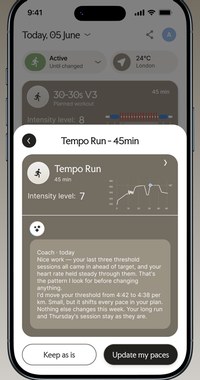
Keep the running and strength work in one place. Explore MaxMile for your Loch Ness Marathon preparation, or compare the levels of personal coaching.
03 / PUT IT INTO PRACTICE
Pace the race you have trained for
Be careful in the first half. The net-downhill start can make a fast pace feel easy, but that effort will cost you later. Aim for an effort that feels a little too easy, and let your pace on the descents come naturally rather than pushing for extra speed.
Plan to reach mile 17 with energy left for the climb. Let your pace slow on the uphill, then settle back into rhythm from mile 19. If you still feel strong on the flat run beside the river into Inverness, that is the place to speed up.
04 / MAKE ROOM FOR TRAINING
When should your block start?
The 2027 race is on Sunday 26 September. A 16-week marathon block would begin around Sunday 6 June 2027, or an 18-week block around Sunday 23 May. Most of your longest runs and race-specific sessions will then fall in July and August. Plan long runs in cooler hours and practise drinking in warm weather.
Use the winter and spring to build consistent easy running and regular strength work, so your legs are ready for downhill sessions when the block starts. Taper through the first weeks of September.
05 / SORT THE PRACTICAL BITS
Kit and race-weekend planning
All marathon runners take the official coach from Inverness Ice Centre on Bught Drive, about 10 minutes’ walk from the Event Village. The organiser asks runners to arrive between 07:00 and 07:30. The journey takes about an hour, and you do not need to book. Spectators and private vehicles cannot reach the start. Bags are dropped at the start and taken to the finish.
The organiser lists pre-race registration on Saturday 25 September 2027 at the Event Village in Bught Park, and every runner must collect their own pack with photo ID. Only bone-conduction headphones are allowed, and walking poles are not permitted. The Event Village has a changing tent but no showers. Inverness accommodation fills up early for race weekend.